
Last updated August 26, 2026
Free on-site gate assessment - hinges, posts, and your LiftMaster or Nice gate operator checked before anything is quoted
The assessment is free and the quote is the invoice.
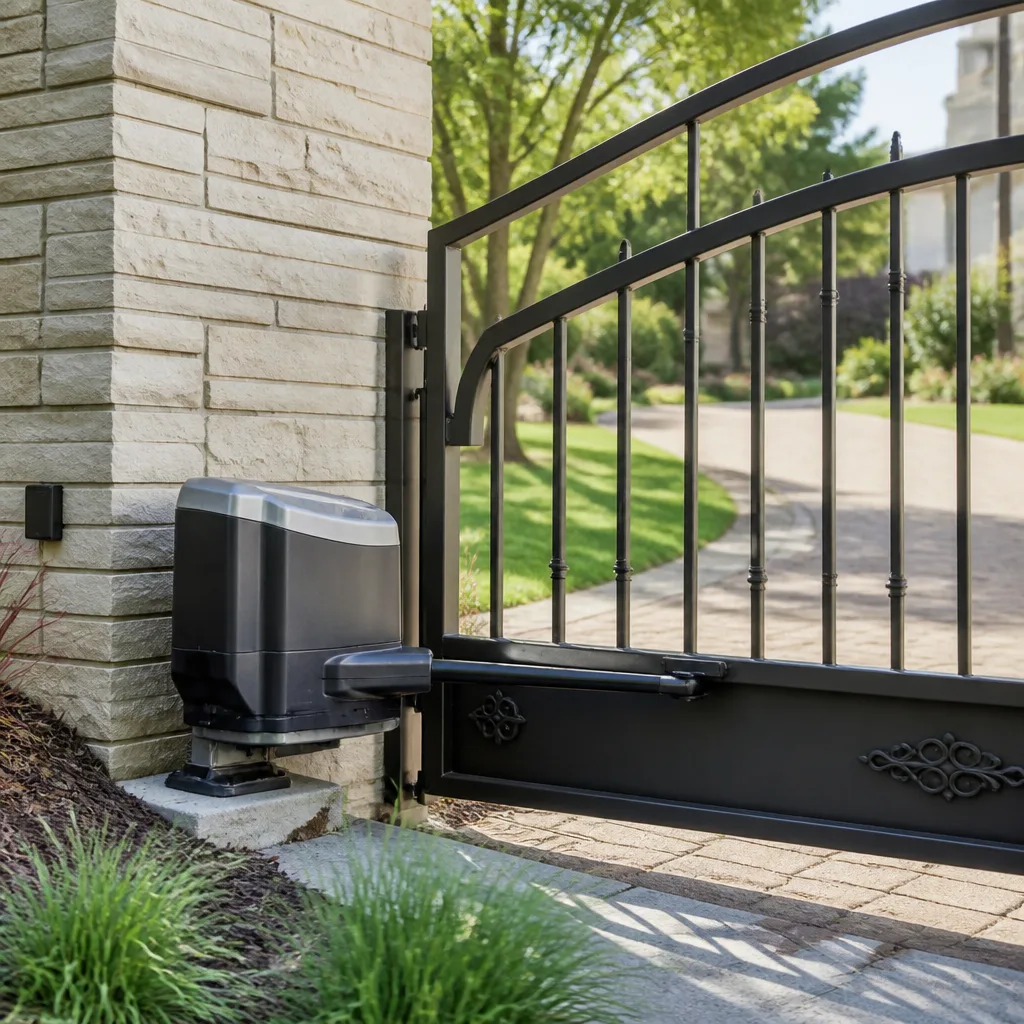
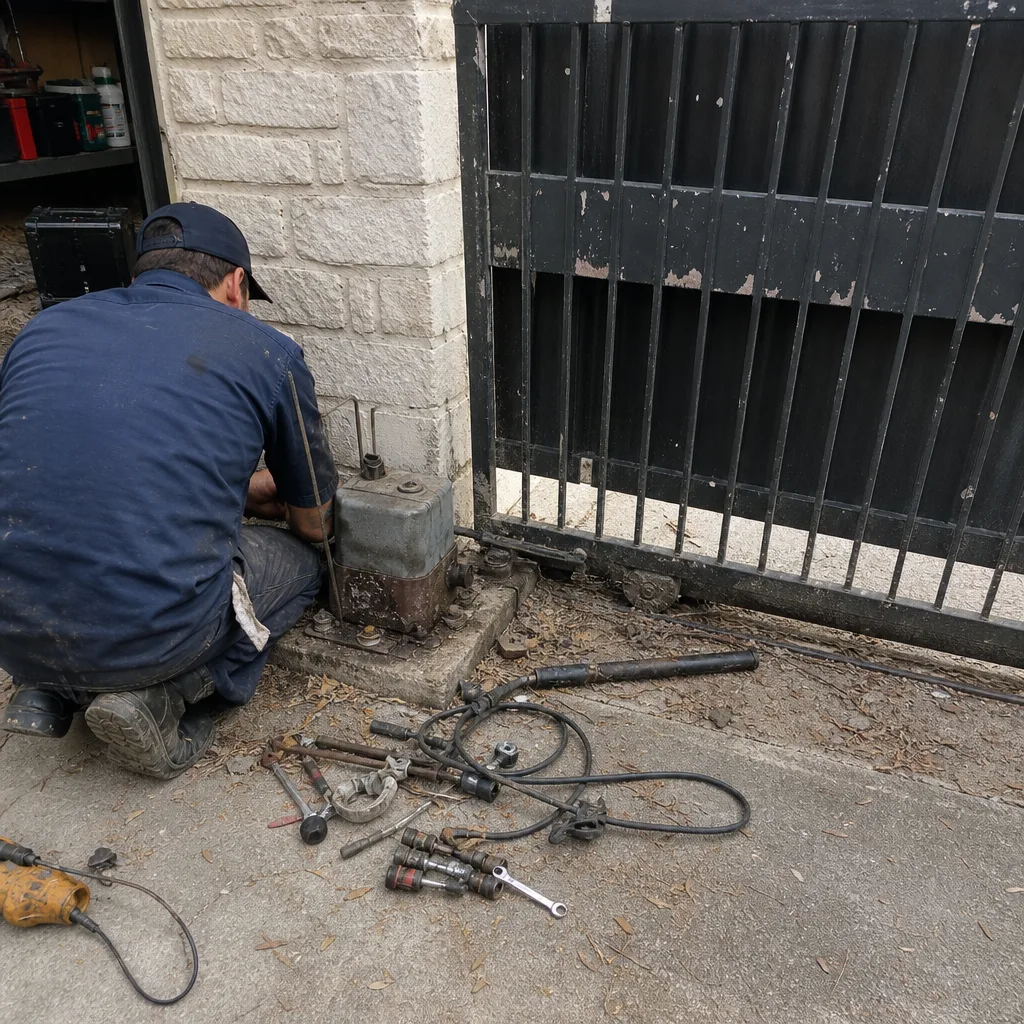 Before
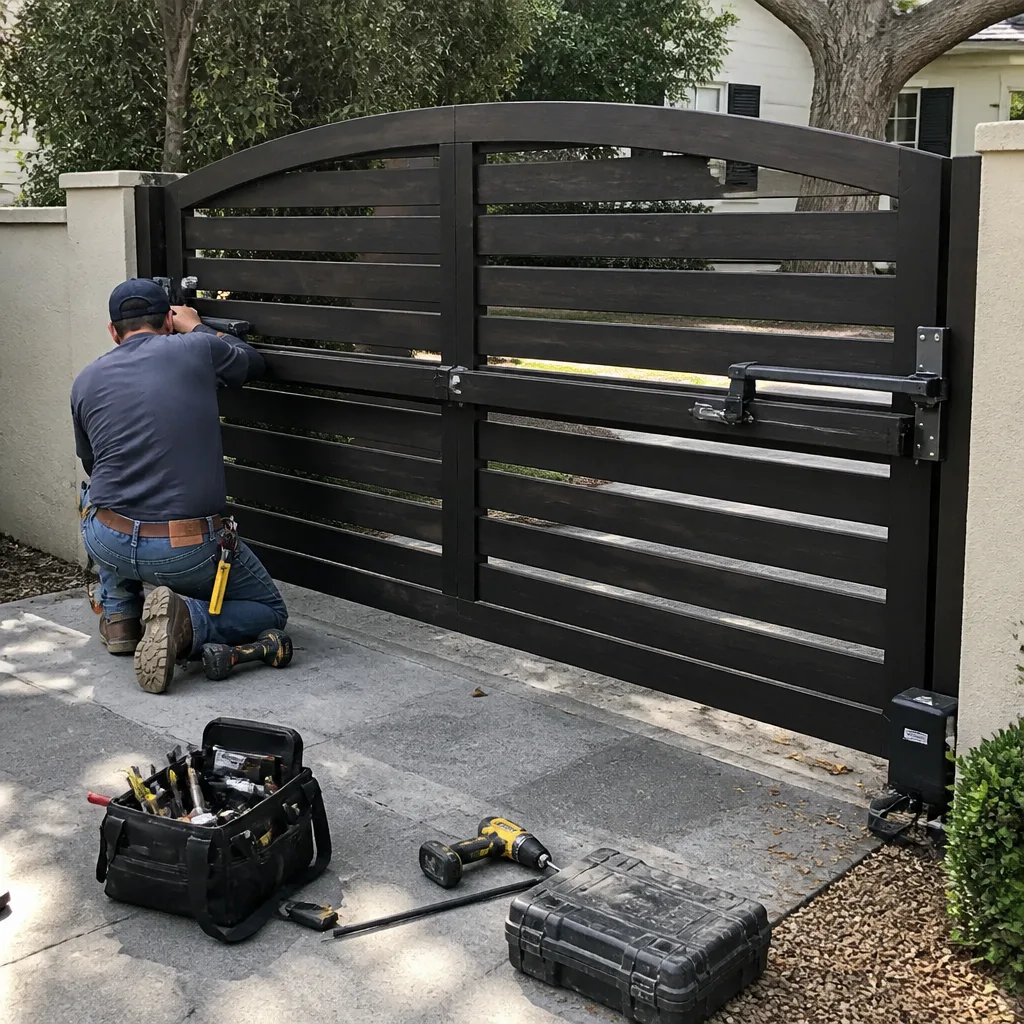 After
After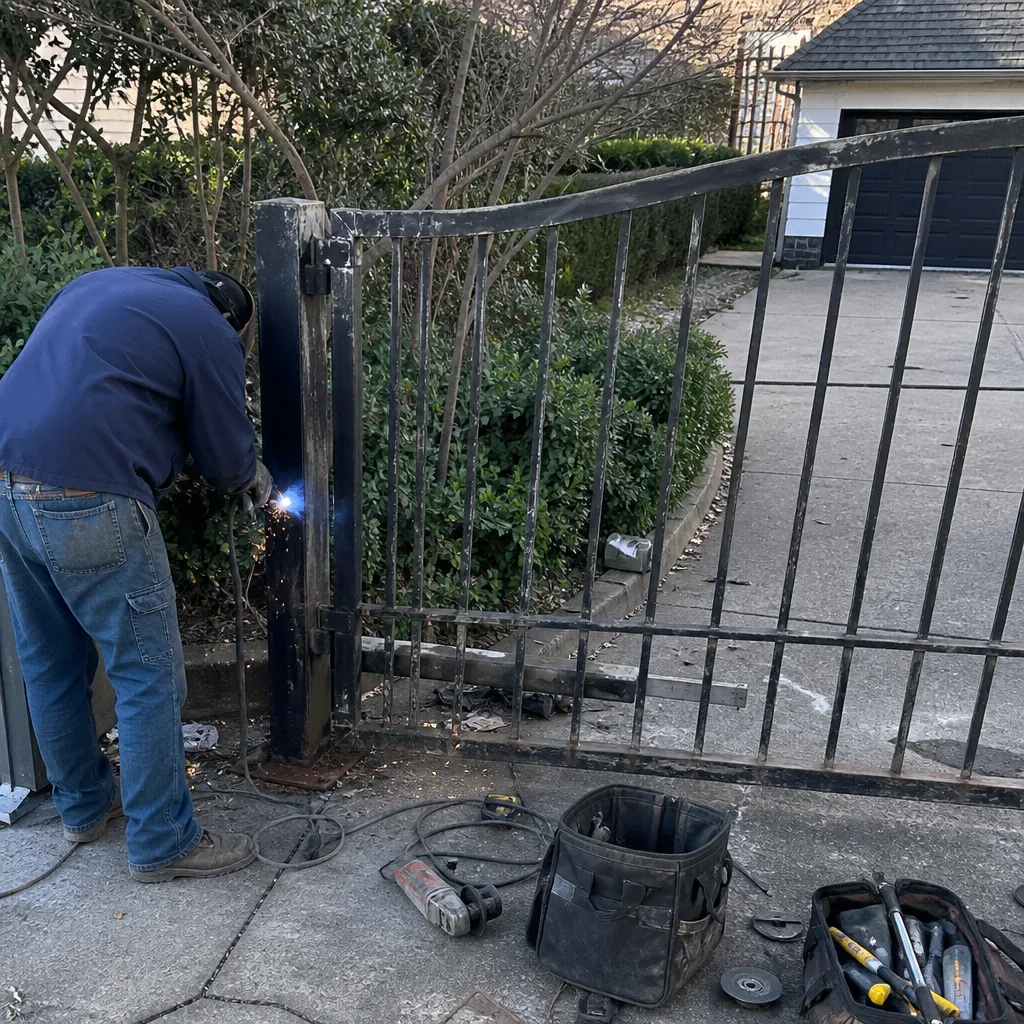 Before
 After
After Before
 After
AfterSeasonal Gate Repair Care for University Park: Year-Round Homeowner’s Guide
University Park doesn’t get the brutal winters that snap gate hardware in Amarillo, but it gets something trickier: enough freeze-thaw cycles to move posts without ever getting cold enough for homeowners to think cold is the problem. A gate that worked fine in October will bind at the latch in February, and by July the same gate is dragging because the heat has done its own quiet work on the operator and the hinges. We’ve been fixing gates in University Park since 2001, and the failures we see follow a calendar almost as reliably as the weather report does. If you learn that calendar, you can do the small thing in the right month instead of the expensive thing in the wrong one. This guide lays out what breaks here, when it breaks, and what you can do about it before it does.
Quick Answer
Seasonal gate maintenance in University Park, TX means checking hinges and latch alignment after winter freezes, cleaning and lubricating before summer heat peaks, addressing rust in fall when sprinkler overspray has finished its worst work, and storm-proofing before spring wind season. Most gate failures here follow a predictable annual pattern tied to freeze-thaw soil movement, thermal expansion, and sprinkler overspray, not rain. A homeowner who spends about two focused hours per year on the right checks can avoid most emergency repairs.
Table of Contents
- The University Park Climate and Why It Breaks Gates Differently
- The February Window: What to Check After Light Freezes
- Summer Heat and Automated Gate Operators in University Park
- Why Fall Is When You Fix Alignment, Not Spring
- The Sprinkler Overspray Rust Problem on Wrought Iron
- Storm Prep for University Park Wind Exposure
- A Workable Year-Round Gate Maintenance Routine
The University Park Climate and Why It Breaks Gates Differently
University Park sits in a climate that doesn’t produce dramatic seasons the way North Texas does, but the gate failures we repair here follow a rhythm that many homeowners miss because the temperature swings are subtle. The problem is not any single extreme; it’s repetition. Soil in University Park expands and contracts with moisture and temperature shifts throughout the winter, and each cycle nudges gate posts a fraction of an inch. Nobody notices one fraction. But twenty cycles add up to a gate that no longer sits square in its frame by the time spring arrives.
The other factor people overlook is that University Park summers are long enough to heat a metal gate far beyond the air temperature. A dark wrought iron gate in direct afternoon sun can be 40 degrees hotter than the thermometer says. That heat does two things: it lengthens the metal, and it bakes the electronics inside the operator housing. Neither one announces itself. The gate just starts moving slower, or the opener trips the safety circuit more often, and suddenly you’re calling for Gate Repair in University Park in July when the problem actually began back in March.
The good news is that these problems are predictable, and predictable problems are preventable. What follows is built around the calendar we actually live by here, not generic advice written for a national audience.
The February Window: What to Check After Light Freezes
If there is one month that matters more than any other for gate health in University Park, it’s February. Here’s why: the light freezes we get in January and February don’t crack steel the way a hard freeze does, but they do something sneakier. Moisture in the soil freezes just enough to expand, then thaws when the sun comes out. That cycle – freeze at night, thaw by afternoon – works gate posts loose over the course of a few weeks. By late February, the soil has gone through enough cycles to shift even well-set posts, especially the hinge post, which carries most of the gate’s weight.
After the last freeze of the season, before spring soil movement begins, do this:
- Check the latch alignment. Open and close the gate twice, watching whether the latch slides cleanly into the strike plate or catches on the lip. A latch that’s suddenly stiff in February means a post has moved, even if you can’t see it.
- Inspect the hinge post for lean. Stand back and sight down the gate line. A post that has tilted even two degrees changes the entire geometry of the gate, and it will only get worse as the ground dries and contracts.
- Look for new gaps around post concrete. Walk around each post and look at the concrete base. Fresh hairline cracks or a visible gap between concrete and post means frost action has started breaking the bond. On a Gatewood Fence & Gate home inspection, this is one of the first things we look at.
- Operate the opener through a full cycle. If you have an automated gate, run it open and closed twice while listening. A motor that labors in February was probably already working harder than it should, and the cold made it obvious.
Every one of these checks is free and takes less than ten minutes. The repairs that follow, when you catch them this early, are almost always cheaper than what they become by May.
Summer Heat and Automated Gate Operators in University Park
University Park summers do not get the worst heat in Texas, but they get enough to affect automated gate operators in ways that surprise homeowners. The most common summer failure we see is not a motor burning out; it’s a control board shutting down because the operator housing got hotter than the board was built to handle. Most gate opener control boards are rated for a maximum ambient temperature, and once the housing exceeds that rating for a sustained period, the board can start dropping commands, tripping the safety circuit, or failing entirely.
Here’s the part most people don’t know: the operator housing itself amplifies the heat. A steel box in direct afternoon sun in University Park can be 20 to 30 degrees hotter inside than the outside air temperature. When the air is 95, the inside of that housing can be 120. Run a DoorKing or Elite operator in those conditions for enough summers, and you’ll eventually cook the board. We’ve replaced enough of them to know the pattern.
The fix that extends operator life more than any other is surprisingly simple: shade the housing. A small shade structure – even a piece of UV-stable polycarbonate mounted a few inches above the housing – can drop the internal temperature by 15 degrees. That is often the difference between a board that lasts ten years and one that dies in four. It does not have to be elaborate; it has to keep direct sun off the metal.
Beyond shade, here’s what to do before the heat peaks in June:
- Test the operator on the hottest day you can manage. Run the gate through three full cycles. If it’s moving slower than it did in April, the heat is already affecting the system.
- Check the vents and airflow around the housing. Leaves, dirt, and wasp nests block airflow. Clean them out.
- Listen for grinding or hesitation on startup. Heat thins the grease in hinges and operator arms, and once the grease flows away, the metal contacts metal and wears faster.
- Confirm the auto-close timer still works. Solar gain can shift the limit switches, and a gate that doesn’t fully close now leaves your property open all afternoon.
One more note for Ghost Controls and Mighty Mule owners: these operators use battery backup systems that degrade faster in sustained heat. If your operator has a battery, check its condition in May, not August. A heat-weakened battery is the most common reason those units fail mid-summer.
Why Fall Is When You Fix Alignment, Not Spring
Most homeowners think spring is the time to fix everything, including gate alignment. For University Park, that’s backwards. Here’s the part competitors in the gate trade rarely explain: thermally expanded metal in summer masks misalignment. When a gate sits in 100-degree sun, the metal has expanded, and that expansion closes small gaps that would otherwise be visible. The gate looks like it fits. Then October arrives, the metal contracts a few millimeters, and suddenly there’s a gap at the latch or a catch at the hinge side that wasn’t there in August.
If you fix alignment in spring, you’re adjusting a gate while the metal is still in its expanded summer state. You’ll set the latch and the stops based on dimensions that don’t exist once the metal cools. Then by November, the gate is binding again, and you’re paying for the same repair a second time. Fixing alignment in fall, when the metal has contracted to its smallest annual dimension, means the adjustment holds through every other season.
A gate sags in the hinge post, not in the middle – and that is where we start. Here’s how we think about fall alignment checks:
- Measure the gap at the latch side when the gate is closed. It should be consistent top to bottom. A wider gap at the top means the hinge post is leaning away.
- Check the gap at the hinge side. If the top hinge gap is tight but the bottom is wide, the gate panel itself has sagged relative to the post – a welding issue, not a post issue.
- Lubricate all hinge pins and the latch mechanism once alignment is confirmed. Fall is the right time for this because the grease will stay in place through the winter instead of melting out in summer heat.
- Address any post movement now. If a post has shifted even a quarter inch during the year’s freeze-thaw cycles, fall is when you reset it – before winter moisture re-saturates the soil and freezes around the repair.
Show me the gate closing on its own and I’ll show you where it’s failing. The fall alignment check is where we find more problems than any other season, and it’s the cheapest time to fix them. If you’d rather have a second set of eyes on it, we offer a free second opinion on any written estimate – bring in what another company quoted, and we’ll tell you honestly whether it’s needed.
The Sprinkler Overspray Rust Problem on Wrought Iron
Here’s a University Park-specific problem that almost nobody talks about: the biggest rust threat to wrought iron gates is not rain. It’s sprinkler overspray. In a climate where rainfall is moderate and intermittent, a gate can go months without sitting in water from the sky. But a sprinkler head that throws a fine mist onto a gate every morning at 6 AM creates a daily cycle of wetting and drying, and that is exactly the cycle that accelerates oxidation on iron.
We see this pattern constantly in University Park neighborhoods with irrigated lawns. The rust starts exactly at the height where the sprinkler water hits the gate – usually in a band across the bottom quarter of the panel, following the arc of the spray. By the time the rust is visible, the metal underneath has been pitting for months. The cycle is easy to break once you know it exists, but it requires addressing the source, not just painting over the symptom.
Here’s how to break the cycle permanently:
- Walk the sprinkler coverage area. Turn on each zone and watch where the water lands. Any head that throws onto the gate needs to be adjusted or redirected. This is the permanent fix; everything else is mitigation.
- Inspect the gate for early rust at the spray line. Look for bubbling paint, orange staining, or flaking along the bottom rail and the first six inches of the pickets.
- Treat early rust before it pits. Wire-brush the affected area, apply a rust converter, and spot-prime. Do this in fall, after the irrigation season winds down, so the repair cures without being re-wetted every morning.
- Consider a rust-inhibiting coating if the gate is in the overspray path and the sprinkler cannot be redirected. Some wrought iron gates hold up better with an annual wax or oil coat, but the real answer is keeping the water off in the first place.
Fix the panel without the post and you’ll fix it twice. Same principle here: fix the rust without fixing the sprinkler and you’ll be sanding again next year.
Storm Prep for University Park Wind Exposure
University Park gets its share of severe weather, and while we don’t sit in Tornado Alley’s bullseye the way some Texas towns do, the straight-line winds that come with spring and fall storm systems are enough to damage a gate that is already marginal. The damage is almost never from wind blowing the gate over; it’s from wind catching a gate that is not properly latched and slamming it against its stops.
Here’s what actually protects a gate during severe weather versus what is theater. Bungee cords are theater – they stretch and release under load, and the gate still slams. Sandbags against the base do nothing for a swinging gate. The things that work are less dramatic:
- Fix the latch before the storm season starts. A gate that latches positively on its own will not swing under wind load. This is the single most effective storm prep you can do.
- Install a drop rod or cane bolt on double gates that are used infrequently. This anchors the passive leaf in place so both panels can’t slam independently.
- For automated gates, verify the manual release works. In a power outage, you need to be able to open the gate by hand. Test the release key or lever in calm weather so you’re not figuring it out in the dark.
- Clear anything stored near the gate that could become a missile. This is the step most people skip. A trash can or a stack of pavers near the gate can get lifted by a gust and driven into the panel.
The storm prep that matters is done in March and April, not when the warning is already on your phone. Once a severe thunderstorm is moving toward University Park, you can’t fix a loose latch. You can only decide which way the gate is going to swing when the wind hits it.
A Workable Year-Round Gate Maintenance Routine
You don’t need to turn gate maintenance into a second job. What follows is the minimum routine that keeps a gate working in University Park’s climate without spending a Saturday on it every month. The goal is to do the right small thing in the right season, so you’re not doing the big thing later.
January – February: After each freeze-thaw cycle, check that the latch still engages cleanly. If the gate is binding, note it and plan to address it during the February window described above. Don’t force a misaligned gate; forcing it bends hardware.
March – April: Test the automated opener through full cycles after the soil has started drying. Check the manual release works. This is also the month to schedule any post stabilization work that the February check identified, before the ground gets hard.
May – June: Shade the operator housing if it sits in direct afternoon sun. Clean the vents. Check battery backup condition if you have a Ghost Controls or Mighty Mule operator. This is the heat-prep window.
July – August: Minimal work – it’s too hot to do much beyond observation. If the gate is dragging, check the ground clearance; dry soil can shift a gate enough to drag on the driveway edge. Call us rather than running the gate repeatedly against resistance.
September – October: This is the big maintenance window. Fix alignment while the metal is contracted. Lubricate hinges and latch. Treat any rust from sprinkler overspray. This is also the time to schedule Gate Installation in University Park if you’re planning to replace a gate before the next spring storm season – fall installations have months to settle before wind season returns.
November – December: Clean leaves and debris from the gate track (if you have a sliding gate) and from around the operator housing. Make sure the gate drains don’t hold water after rain. A final latch check before the freeze-thaw season starts again.
This entire routine adds up to about two hours of work per year, spread across six short sessions. The alternative – ignoring it until something breaks – costs, on average, three to five times what the preventative work would have, and it never breaks at a convenient time.
If your gate has a motor or opener that is giving you trouble, we service Gate Motor & Opener in University Park across nine major brands, including LiftMaster, FAAC, BFT, Linear, Viking, Ghost Controls, DoorKing, Elite, and Mighty Mule. Hal Gatewood has been working on these systems since 2001, and the person who shows up is the person whose name is on the shop.
Common Mistakes to Avoid
- Fixing alignment in spring. Thermally expanded metal in summer makes a gate look properly aligned when it’s not. Wait until fall when the metal has contracted to its true dimension, and the adjustment will hold for the full year instead of a few months.
- Ignoring a latch that’s suddenly stiff in February. A stiff latch is a post movement indicator, not a lubrication problem. Greasing it masks the symptom while the post continues to shift.
- Lubricating hinges with penetrating oil in summer. Oil flows out of the hinge pins when the metal is hot, leaving dry metal-on-metal contact. Use grease, not oil, and apply it in fall.
- Painting over rust without fixing the sprinkler that caused it. The rust returns within one irrigation season. Redirect the spray head first, then treat the metal.
- Leaving the passive leaf of a double gate unanchored. In a wind event, both panels slam independently and both get damaged. A drop rod costs little and takes one afternoon to install.
- Replacing an operator when the real problem is shade. A control board that overheats will be replaced, and the replacement will overheat too. Check whether the housing sits in direct afternoon sun before spending money on a new board.
- Waiting until a storm is forecast to do storm prep. Once the warning is on your phone, it’s too late to fix a latch or anchor a panel. Storm prep happens in March, not during the watch.
When to Call a Professional
Some gate problems announce themselves early, and those are the ones to call on before they become emergencies. If the hinge post has visibly shifted, if the operator is tripping the safety circuit repeatedly, if the gate drags on the ground, or if you find rust that has already caused pitting, those are not homeowner repairs. Welding a cracked hinge bracket or resetting a post in concrete requires equipment and experience that most homeowners don’t have, and the cost of a botched attempt is always higher than doing it right the first time. We are not saying you can’t fix things yourself; we’re saying that the point at which a repair involves structural steel or electrical work is the point to pick up the phone. Gatewood Fence & Gate offers free estimates in University Park. Call (936) 296-2568 and Hal will tell you straight what the job needs.
Frequently Asked Questions
Gate repair in University Park typically runs from $150 for a simple latch adjustment or hinge lubrication to $700 or more for post resetting, rust remediation, or operator board replacement. The price depends on whether the problem is hardware, structure, or electronics, and the only way to know is to look. Gate Repair in University Park starts with a free estimate, and we quote the price before any work begins. Call (936) 296-2568 for an exact number on your specific gate.
For most automated gates in University Park, an annual service – ideally in fall, before the winter freeze-thaw cycle – keeps the operator, hinges, and alignment in good working order. Gates that get heavy daily use, especially in commercial or multi-family settings, may need twice-yearly service. The annual visit should include limit switch checks, hinge lubrication, operator housing inspection, and a full cycle test under load.
Yes. A live person answers the phone at (936) 296-2568 around the clock, and for genuine emergencies – a gate stuck open, a gate that won’t close, an operator that failed – we prioritize same-day service in University Park. We don’t route calls through a call center, and the person who answers can tell you honestly whether the problem can wait a day or needs someone out now.
A full Gate Installation in University Park includes site assessment, post setting in concrete, gate panel fabrication or installation, hinge and latch hardware, and if the gate is automated, the operator, safety sensors, and limit adjustments. We provide a written quote that covers the entire job, and we stand behind every installation with the 90-Day Done Right Promise. No surprises on the invoice, because the price is agreed before work starts.
Yes. We handle the full electrical scope on automated gate installations and retrofits, including the power run, safety edges, loop detectors where needed, and operator wiring. We service all major operator brands, including Gate Motor & Opener in University Park systems from LiftMaster, FAAC, BFT, Linear, Viking, Ghost Controls, DoorKing, Elite, and Mighty Mule.
Winter gate sticking in University Park is almost always caused by freeze-thaw cycles moving the hinge post a fraction of an inch, which changes the latch geometry. The fix is to check post movement after the last freeze and reset or shim the post before spring. Greasing the latch in February masks the symptom without fixing the post, and the problem returns every winter until the post is addressed.
The Bottom Line
Gate failures in University Park follow a calendar, and once you know the calendar, you can stay ahead of most of them. February is for post and latch checks after freeze-thaw movement. May is for operator heat prep. Fall is for alignment, lubrication, and rust treatment – the one maintenance window that matters most. Storm prep happens in March, not during the warning. And the sprinkler overspray problem doesn’t fix itself until someone redirects the head. Two focused hours a year is what it takes for most gates. If you’d rather have Hal look it over, call (936) 296-2568. The estimate is free, the name is on the shop, and the shop is down the road.
Written by Hal Gatewood, Owner at Gatewood Fence & Gate, serving University Park since 2001.