
Last updated August 26, 2026
Free on-site gate assessment - hinges, posts, and your LiftMaster or Nice gate operator checked before anything is quoted
The assessment is free and the quote is the invoice.
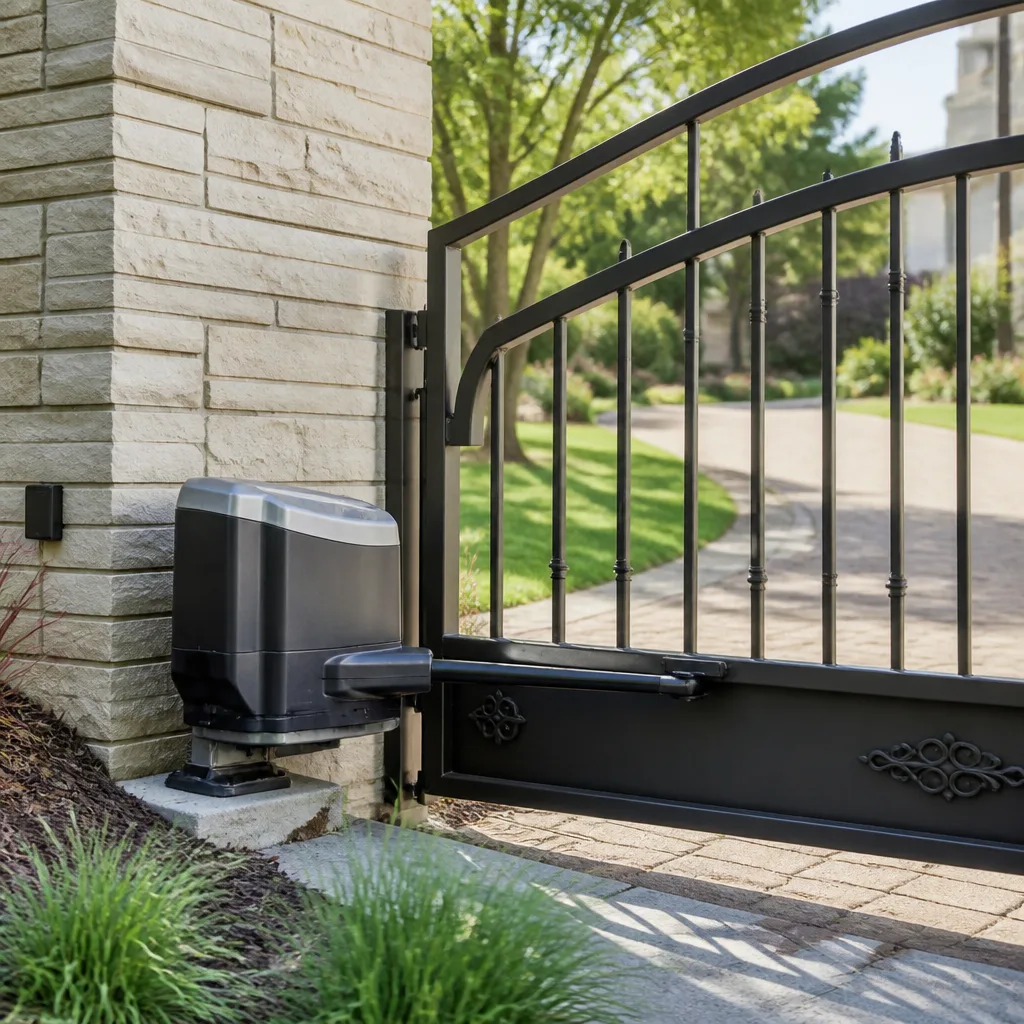
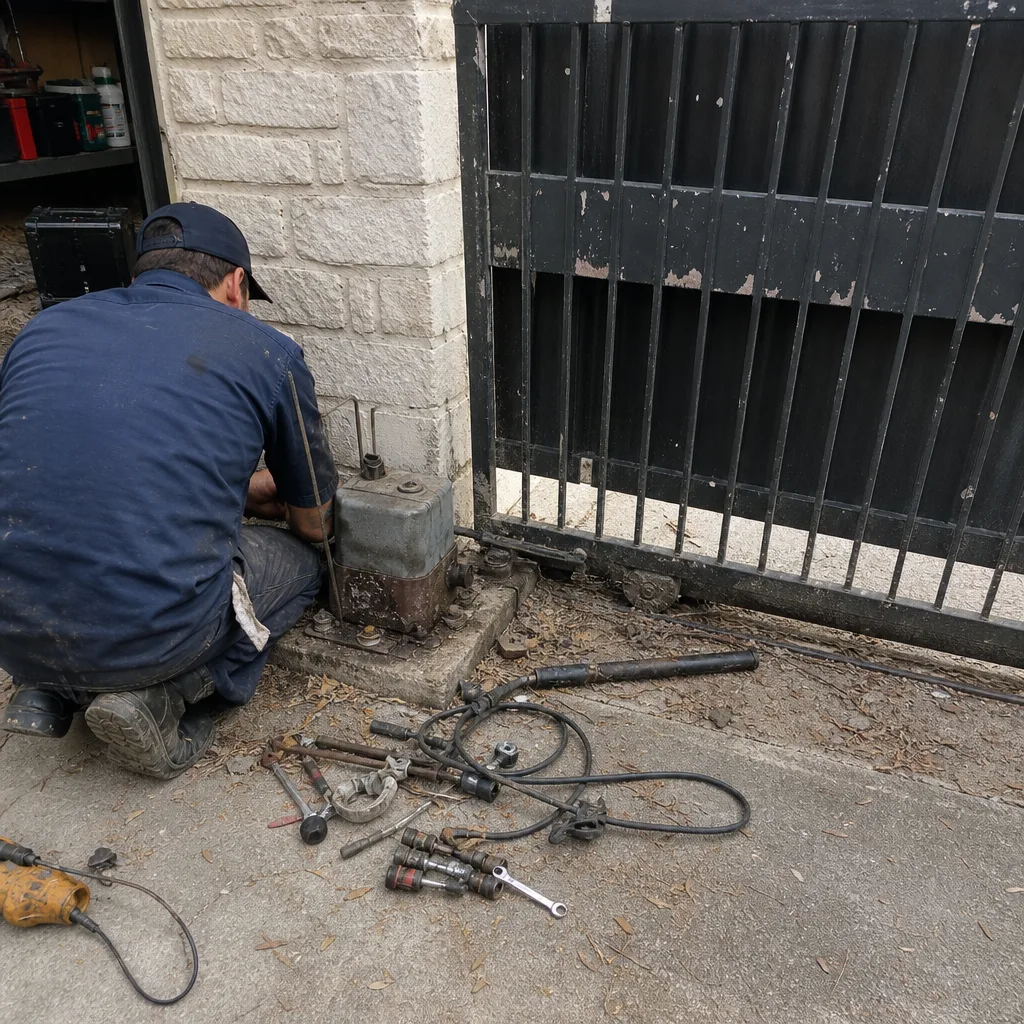 Before
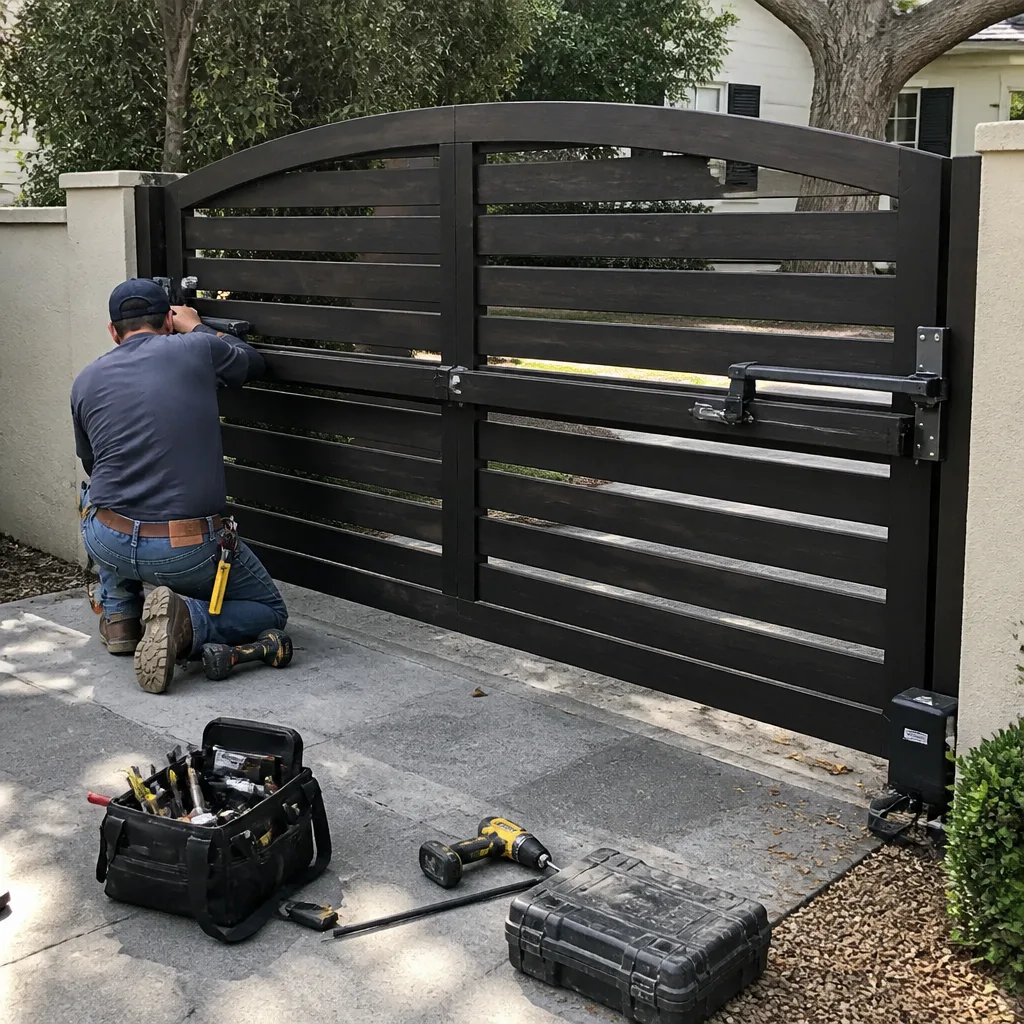 After
After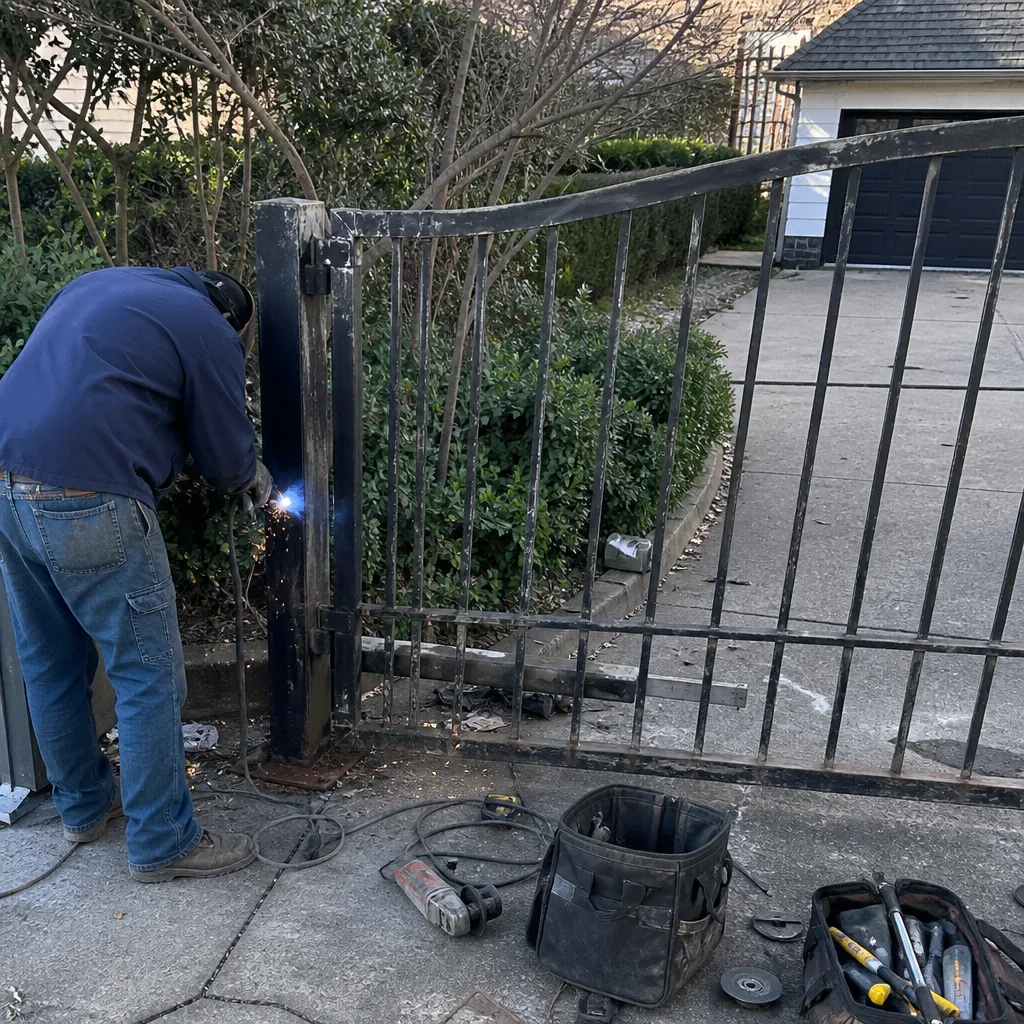 Before
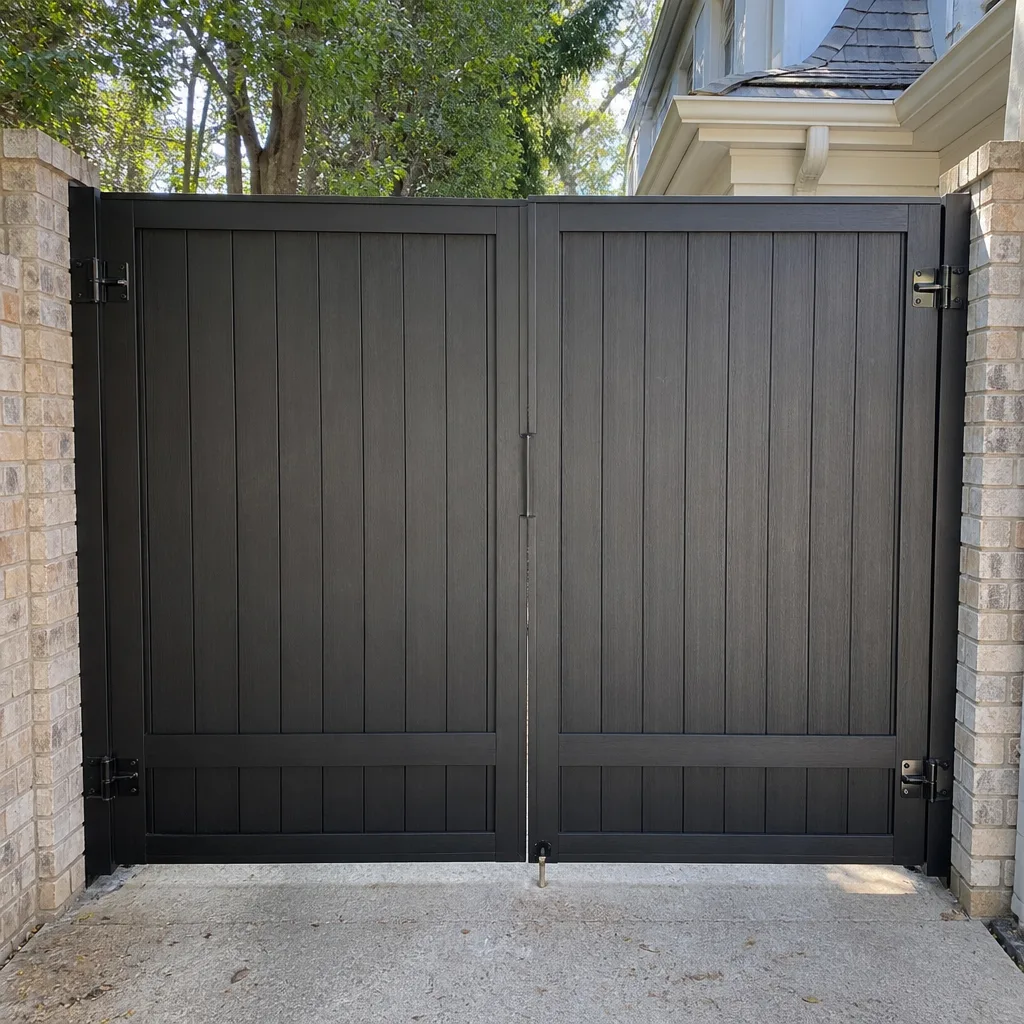 After
After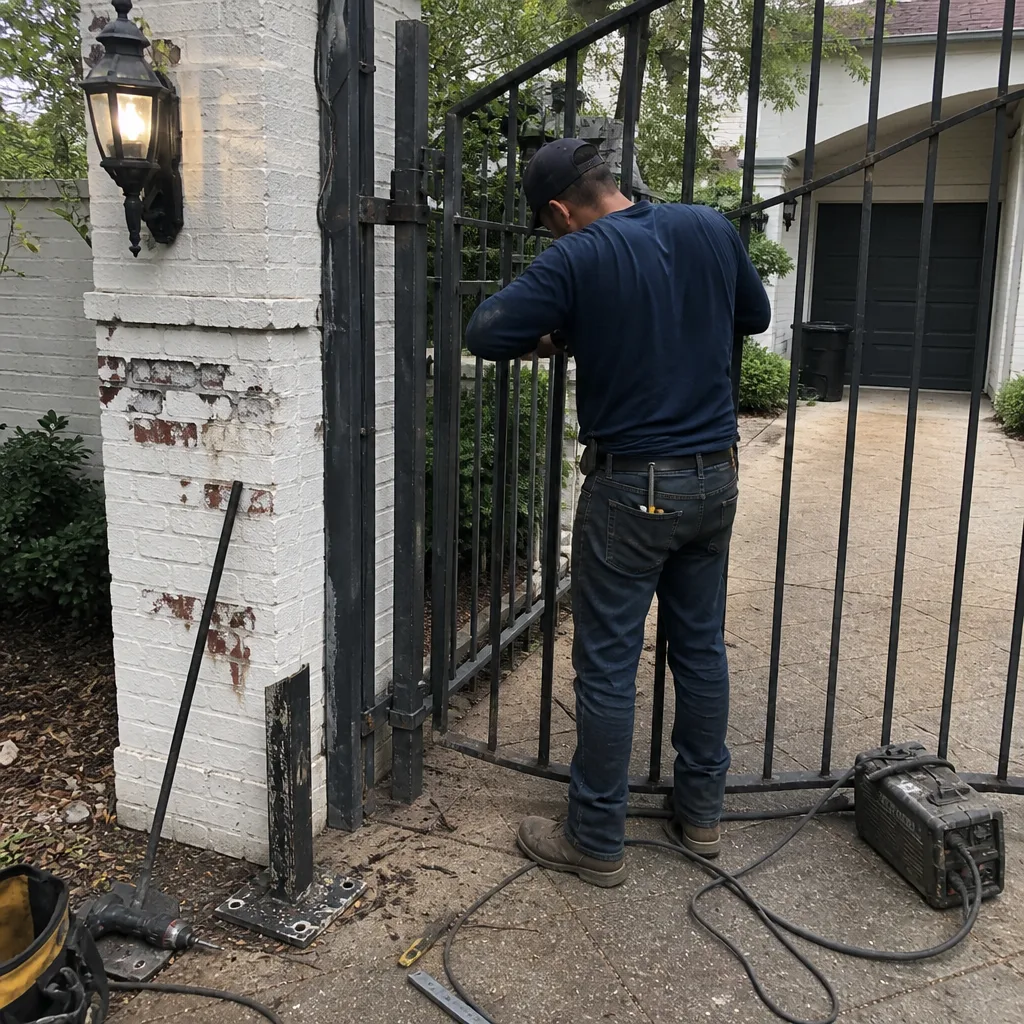 Before
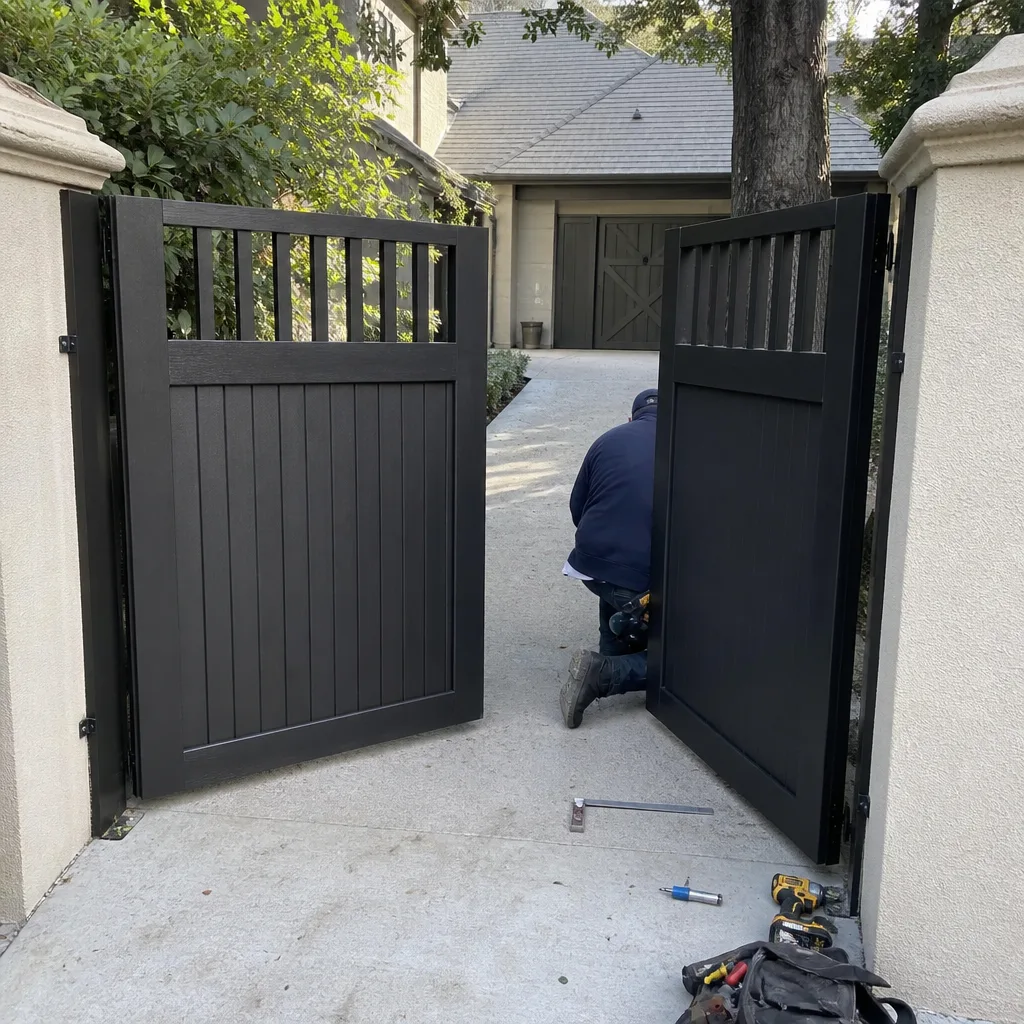 After
AfterThe Complete Guide to Gate Repair in University Park
The average University Park gate Hal gets called to has already been “fixed” once, usually by whoever installed the fence, usually for free the first time, and usually in a way that guaranteed a second call within eighteen months. If that describes your gate, this guide will explain why it keeps failing, what the first repair missed, and how to tell the difference between a fix that will hold and one that’s just buying time. By the time you finish reading, you’ll know more about how your gate works than the person who installed it, and you’ll know exactly what to ask before anyone touches it again.
Quick Answer
Professional Gate Repair in University Park most often comes down to one of three root causes: clay soil shifting the posts, hinges that were undersized for the gate’s weight, or an opener working against a gate that was never properly aligned. A structural repair addresses the post and the load path and holds for years; a cosmetic patch re-tightens what’s already failing and lasts months. We fix the post, the load path, and the alignment in one visit, and every job carries our 90-Day Done Right Promise in writing.
Table of Contents
- The Three Root Causes Behind Most University Park Gate Failures
- Why University Park Clay Soil Moves Your Gate Posts (And What That Does)
- Structural Repair vs. Cosmetic Patch: What the Invoice Doesn’t Tell You
- How to Read a Gate’s Wear Pattern to Find the Real Problem
- “Adjusted” vs. “Repaired” on a Service Invoice: Why It Matters
- Questions to Ask Any Contractor Before They Touch Your Gate
- When Repair Is the Right Call (And When It Isn’t)
- Seasonal Maintenance That Prevents Most Repairs
The Three Root Causes Behind Most University Park Gate Failures
We’ve been fixing gates in University Park since 2001, and after a few thousand service calls, a pattern emerges. Almost every failure traces back to one of three things, and none of them are the part that actually broke.
The first is the post. A gate can weigh anywhere from 150 pounds for a light residential walk gate to 800 pounds or more for a steel driveway gate. That entire load hangs off a post buried in soil. If the post wasn’t set deep enough, wasn’t set in enough concrete, or was set in soil that shifted, the gate’s entire geometry changes over time. The hinges bind, the latch stops lining up, the opener strains.
The second is the hinge system. Many installers use a hinge rated for half the actual weight of the gate because it’s what they had on the truck. The gate works fine for a year, then the hinge pin wears into an oval, the gate drops half an inch, and suddenly nothing closes the way it should. We regularly see gate hinges in University Park that were welded to the post by someone who knew how to run a bead but didn’t understand load distribution.
The third is the opener fighting the gate rather than working with it. If the gate sags even a quarter of an inch, the opener has to push harder every single cycle. The motor burns out faster, the gear strips, the circuit board overheats. And the homeowner replaces the opener, because that’s what failed, without ever addressing the sag that killed it.
Understanding these three causes changes how you approach repair. You stop replacing parts that were never the problem. You start looking at the post, the load path, and the alignment first. That is what gate repair in University Park actually means, and it’s the approach we take on every job, whether it’s a small walk gate or a full automated driveway entrance.
Why University Park Clay Soil Moves Your Gate Posts (And What That Does)
University Park sits on clay-heavy soil, and clay has a very specific personality: it expands when it’s wet and contracts when it’s dry. A post hole dug in clay becomes a concrete column sitting in a material that changes volume with every rainstorm and every August dry spell. We measure the effects in fractions of an inch per season, but a gate post only needs to move half an inch to throw the entire gate out of square.
Here is what that soil movement looks like in practice. After a wet spring, the clay swells and pushes against the concrete footing. If the footing isn’t deep enough or wide enough, the post can actually lift slightly. Then summer arrives, the clay shrinks, and the post settles back but not necessarily into the same position. Repeat that cycle for five or ten years and a post that was plumb when it was installed now tilts two or three degrees. The gate hangs lower, the gap at the latch changes, and the opener starts working harder.
We see this pattern more in the older neighborhoods of University Park, where gates were often set by hand without the concrete depth we use now. The fix is not to tighten the hinges and hope. The fix is to re-set the post: dig out the old footing, go deeper, use the right amount of concrete, and brace everything until it sets. It’s more work than adjusting the hinges, which is why the first repair often skips it. But a post re-set in University Park clay is typically a fifteen to twenty year fix, while a hinge adjustment on a moving post is a six month fix.
How to Tell If Your Soil Is the Problem
- Stand back and look at the gate from the side. If the gap between the gate and the post is wider at the top than at the bottom, the post or the gate frame has moved.
- Check the latch. If it used to line up and now it’s off by a quarter inch or more, something under the gate shifted.
- Watch the gate open and close. If it swings smoothly for most of the arc but scrapes or binds near the closed position, the post has tilted toward the gate’s path of travel.
- Check for cracks in the concrete around the post base. Hairline cracks that widen after a rain are a telltale sign of clay pressure.
If you’re seeing any of those signs, the problem is in the ground, not the hinge. Fix what’s actually moving and the gate stops fighting itself. This is one of the reasons we weld on site rather than hauling gates back to a shop: we can re-set a post and remount the gate in your driveway, the same day, and you can watch the alignment come back into square.
Structural Repair vs. Cosmetic Patch: What the Invoice Doesn’t Tell You
There are two ways to repair a sagging or binding gate, and they produce very different results. A cosmetic patch addresses the symptom: tighten the hinge bolts, grind the latch plate, add a shim, bend the bracket back. The gate works better for a few weeks, maybe a few months, and then it settles back to where it was, because nothing underneath changed.
A structural repair addresses the cause: re-set the post, replace the undersized hinges with the right load rating, reinforce the frame, repair or replace the failed weld. The gate works better immediately, and it stays working because the actual problem is gone.
Wrought iron gates are the classic University Park example of why this distinction matters. A wrought iron gate that sags is usually failing at the frame joints, where the pickets meet the top and bottom rails. The original joints were often riveted or lightly welded decades ago, and decades of temperature cycles in Texas have fatigued the metal. A cosmetic patch repaints the rust spots and maybe welds over the visible crack. It looks fine for six months, because paint hides everything. Then the crack propagates under the weld, the gate drops again, and now you are paying twice: once for the patch, and again for the real repair plus whatever new damage happened in between.
The cost difference is not as wide as you might think. A structural repair on a failing joint costs more up front than a quick patch, but it’s a one-time expense. The patch is a subscription. We encourage anyone in University Park to ask the contractor, before they start, whether they are fixing the post or just the hinge, whether they are welding the crack or just covering it. If the answer is vague, that’s your answer.
How to Read a Gate’s Wear Pattern to Find the Real Problem
Every gate tells you what’s wrong with it, if you know how to look. We diagnose most University Park gate repairs by reading the wear pattern before we ever pick up a tool, and you can do the same preliminary check in five minutes.
Start with the hinges. If the bottom hinge is worn but the top is tight, the gate’s weight is resting unevenly on the bottom hinge, which means the top hinge is not carrying its share. That points to a post that’s tilted or a gate frame that’s racked. If both hinges show even wear, the load is balanced and the hinge size is probably the issue, meaning they were undersized for the gate’s weight from day one.
Next, look at the ground under the gate. A curved scrape mark in the concrete or dirt means the gate has been dragging as it swings. That’s either a post lean, a hinge drop, or a frame that’s sagging in the middle. If the scrape is deepest at the far end of the gate’s arc, away from the hinge post, the gate itself is bending. If it’s uniform along the entire arc, the whole assembly is dropping evenly, which suggests the post footings are both moving or the hinges have worn symmetrically.
Then look at the latch and the opener arm. A latch that’s polished bright on one edge was forced, repeatedly, against a strike plate that didn’t line up. An opener arm with a slight curve or bow was binding against the gate before the arm bent to absorb the stress. These are secondary wear marks, meaning the primary failure happened somewhere else and the latch and opener were just victims.
Finally, check the concrete around the posts. Cracked, crumbling, or lifting concrete means the footing is failing or the soil beneath it is moving. This is the single most common finding on older University Park gates, and it’s the one most repairs skip because it’s the most labor-intensive to fix properly.
“Adjusted” vs. “Repaired” on a Service Invoice: Why It Matters
Service invoices use two words that sound similar but describe very different work. Adjusted means the technician tightened, shimmed, lubricated, or realigned something that was already installed. Repaired means the technician replaced, re-welded, reinforced, or re-set a component that had failed.
The distinction matters for one practical reason: if a gate was adjusted rather than repaired, and it fails again in the same spot, no warranty covers that, because the part was never actually fixed. You paid for the service call and the labor, but the underlying problem remains on your property, waiting. When a repair is done structurally, the failed component is addressed directly, and a meaningful warranty can be attached to the work.
Our 90-Day Done Right Promise is simple: if the repair doesn’t hold, it’s not done right, and we come back and make it right, in writing, on every single job. We don’t “adjust” a sagging gate unless the diagnosis genuinely calls for adjustment, and we’ll tell you which one you’re getting before we start. If you’re comparing bids in University Park, ask each contractor what specifically they will do, and whether the word on the invoice will be adjusted or repaired. It’s a fair question, and the way they answer tells you a lot.
Questions to Ask Any Contractor Before They Touch Your Gate
Most contractor vetting advice is generic: are you licensed, are you insured, how many years have you been in business. Those are all fine, but they won’t tell you whether the person can actually fix a gate. Here are the gate-specific questions we recommend asking any contractor before they start work on a University Park gate.
- What’s the actual load rating of the hinges you’re installing? Hinges have weight ratings, and they should match or exceed the gate’s actual weight, not its “looks about right” weight.
- Are you re-setting the post or just re-drilling the hinge holes? If the post has moved, re-drilling the holes just moves the problem half an inch over. It works until the post moves again.
- Is this a welded repair or a bolted repair? For wrought iron and steel, a proper weld is often the correct structural fix. Bolts work in tension but fail in shear on moving gate frames.
- What’s the concrete depth on the post? University Park clay requires footings below the frost line and below the active shrink-swell zone, typically 30 inches or deeper for a heavy gate post.
- Do you adjust the opener after the gate repair? If the gate was binding, the opener has been working against it. A good repair includes reprogramming the opener’s limits and force settings so it’s not starting from a stressed state.
- What does your warranty actually cover? If the answer mentions “workmanship” but not hardware, ask again. If the answer is vague about what happens when the same problem recurs, that’s a red flag.
These questions separate the people who diagnose from the people who swap parts. They also give you a written record of what was promised, which is useful if anything goes sideways. Hal Gatewood has been answering these exact questions since 2001, and he’ll answer them for you the same way: straight, with the gate right there in front of both of you.
When Repair Is the Right Call (And When It Isn’t)
We repair before we replace. It’s core to how we work, and it’s why we weld on site and fabricate parts rather than ordering entire new gate assemblies. Most University Park gates have years of service left in them if the structural issues are addressed directly. But there are times when pushing forward with a repair is throwing good money after bad.
A gate is a good candidate for repair when the frame is straight, the metal is sound, and the failure is in the post, the hinges, the latch, or the opener. These components can all be replaced or re-set, and the gate’s service life extends for another decade or more.
A gate is a poor candidate for repair when the frame itself is compromised: the bottom rail has rusted through in multiple places, the pickets are loose in their sockets, or the whole structure has so much play that welding one crack just shifts the stress to the next weak point. At that point, a full gate installation in University Park is the honest recommendation, not a repair.
We’ll tell you which one you have, and we’ll tell you before any work is quoted. If we can repair it, we will, and if we can’t, we’ll show you exactly why. That conversation happens on site, at your gate, with the numbers in front of you, and the price is agreed before we touch anything.
Seasonal Maintenance That Prevents Most Repairs
University Park has two seasons that are hard on gates: the wet spring and the dry late summer. A little maintenance at the right times prevents most of the failures we get called for.
Spring (April through June): After the clay has gone through its spring expansion, check the post concrete for new cracks and check the gate for scrape marks that weren’t there last fall. Moisture means rust, so check for paint chips and bare metal spots where oxidation is getting a foothold. Lubricate the hinge pins with a dry lubricant, not grease, which attracts grit and turns into grinding paste.
Late summer (July through September): As the clay dries and contracts, check the latch alignment. This is when posts settle and latches stop lining up. Run the opener through a full cycle and listen for changes in pitch or speed; an opener that’s suddenly working harder is often the first sign of a post that’s moving. Tighten any hinge bolts that have worked loose, using a torque wrench if you have one and a hand check if you don’t.
Year-round: Keep the gate track clear of debris if it’s a sliding gate, keep vegetation from growing against the frame, and don’t let the gate sit half-open for days at a time, which puts off-center load on the hinges. If you have an opener, cycle it at least once every two weeks even when you’re not using the gate; motors and gearboxes last longer when they’re exercised.
If any of this turns up something you don’t like, call before it becomes a failure. Most of the major repairs we do on University Park gates started as a small seasonal issue that got ignored for a year or two. The gate motor and opener side of the system is especially sensitive to neglected alignment; a motor that’s been straining for six months doesn’t usually recover with a simple adjustment.
Common Mistakes to Avoid
- Tightening the hinges without checking the post. If the post moved, tightening the hinge bolts just transfers the load to a smaller contact area, and the hinge fails faster. A sagging gate in University Park is a post problem until proven otherwise.
- Swapping the opener without fixing the gate. The opener usually dies because the gate was binding, not because the opener was defective. Put a new opener on a binding gate and you’ll kill the new one too.
- Greasing a hinge with heavy grease. Grease holds grit and dust, and in Texas that means a hinge that grinds itself to death. Dry lubricants are the right call for gate hardware.
- Welding over a crack without grinding out the corrosion. A weld over rust looks solid but bonds to oxide, not metal. The crack returns under the new weld, usually within a season. This is the classic “fixed it twice” mistake on wrought iron.
- Ignoring scrape marks on the ground. Scrape marks are diagnostic evidence. They tell you the gate has been dragging, which means something moved, which means a structural issue is developing. Covering the scrape with pavers doesn’t fix the gate.
- Accepting a verbal warranty. If the warranty isn’t in writing, it doesn’t exist. Get the terms on the invoice, with the contractor’s name and license number on the same page.
When to Call a Professional
You should call a professional whenever the post shows signs of movement, the hinges show visible wear or play, the gate drags on the ground, or the opener stops responding, reverses unexpectedly, or makes a grinding sound during travel. These are structural and mechanical failures that get worse every time the gate is cycled, and they require tools, experience, and a second pair of hands. If you see a cracked weld, leave it alone and call; a failing weld on a heavy gate can let go without warning, and a falling gate panel is not something you want to be standing near.
Gatewood Fence & Gate offers free estimates in University Park. For more guides & resources, visit our blog. If you’re not sure whether your gate needs a repair or just an adjustment, call and describe what you’re seeing, or schedule a visit and Hal Gatewood will look at it with you, on site, and tell you straight what needs done. Call (936) 296-2568 and you’ll get a live person, day or night, not a voicemail.
Frequently Asked Questions
Most gate repairs in University Park run between $150 and $650, depending on whether the work is an adjustment, a hinge replacement, or a post re-set. A simple latch or hinge repair is on the lower end; a full post re-set with concrete work and gate remounting is on the higher end. The price is quoted and agreed before any work starts, and we offer $40 off any repair over $200, so the final number on the invoice matches the number you approved. Call (936) 296-2568 for an exact quote on your gate; estimates are free, and there’s no trip charge inside the county.
Yes, but the old weld usually needs to be ground out and re-done properly, because the original weld was likely made over corrosion or with insufficient penetration. A weld over rust or paint bonds to the surface layer, not the base metal, which is why the gate sags again. We remove the old weld, repair the joint correctly, and the gate stays fixed. If a previous repair failed, we inspect the whole frame for other weak points so the next failure doesn’t happen somewhere else.
A typical post re-set takes one day on site, which includes digging out the old footing, setting the new one with the right concrete depth for University Park clay, and remounting the gate. The concrete needs time to cure before the gate sees full use, but the post is self-supporting within a day and the gate can be operated with care. We schedule post re-sets with that timing built in, and we’ll tell you exactly when to cycle the gate and when to leave it alone.
We work on the complete system: the gate, the hinges, the posts, the opener, the safety edges, and the access control. If your opener is fighting a misaligned gate, we’ll diagnose both, because fixing one without the other just moves the problem around. We service FAAC, BFT, Linear, and Viking openers among others, and we carry or can get parts for all nine major brands we support.
Yes: $40 off any repair over $200, a free second opinion on any written estimate from another University Park contractor, no trip charge inside the county, and a permanent 10% discount for seniors and veterans. These offers stand without haggling. The price we agree on is the price you pay, and it’s in writing before work begins.
If the repair fails within 90 days and we did the work, we come back and make it right, no charge, no runaround. That is our 90-Day Done Right Promise, and it’s stamped on every job in writing. Hal Gatewood’s name is on the invoice and the shop is in the community; standing behind the work is how a local business earns twenty-nine years of repeat customers.
The Bottom Line
Most University Park gate failures come from three sources: soil movement in the clay, undersized hinge hardware, and openers forced to work against misaligned gates. The fix that matters is the one that addresses the actual cause, which is why we diagnose before we touch anything, re-set posts rather than re-drill around them, and weld on site rather than patching and hauling away. A repair that’s done right is a one-time expense; a patch is a payment plan.
You can reach us 24 hours a day at (936) 296-2568. A live person answers, every time. For more on who we are and how we work, start with the Gatewood Fence & Gate home page, or read more about what a full installation includes if your gate is beyond saving.
Written by Hal Gatewood, Owner at Gatewood Fence & Gate, serving University Park since 2001.