
Free on-site gate assessment - hinges, posts, and your LiftMaster or Nice gate operator checked before anything is quoted
The assessment is free and the quote is the invoice.
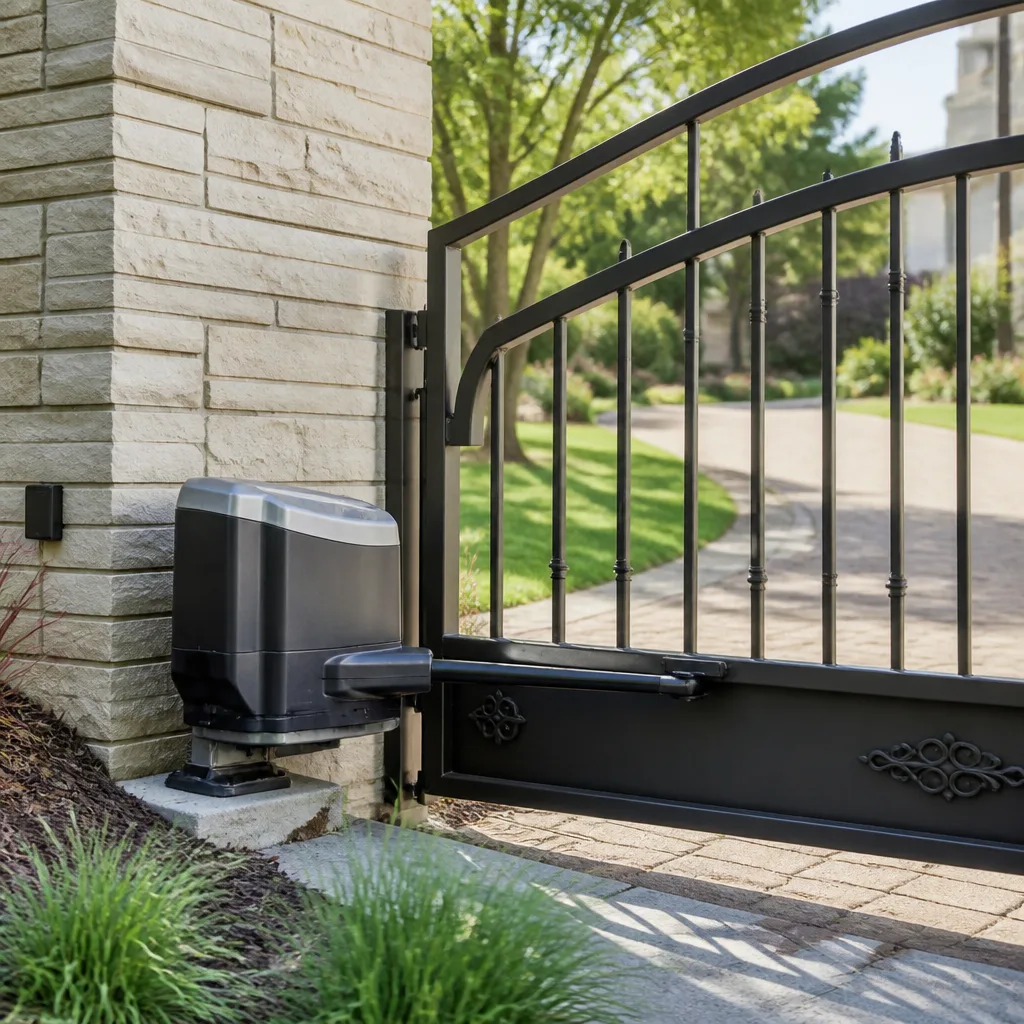
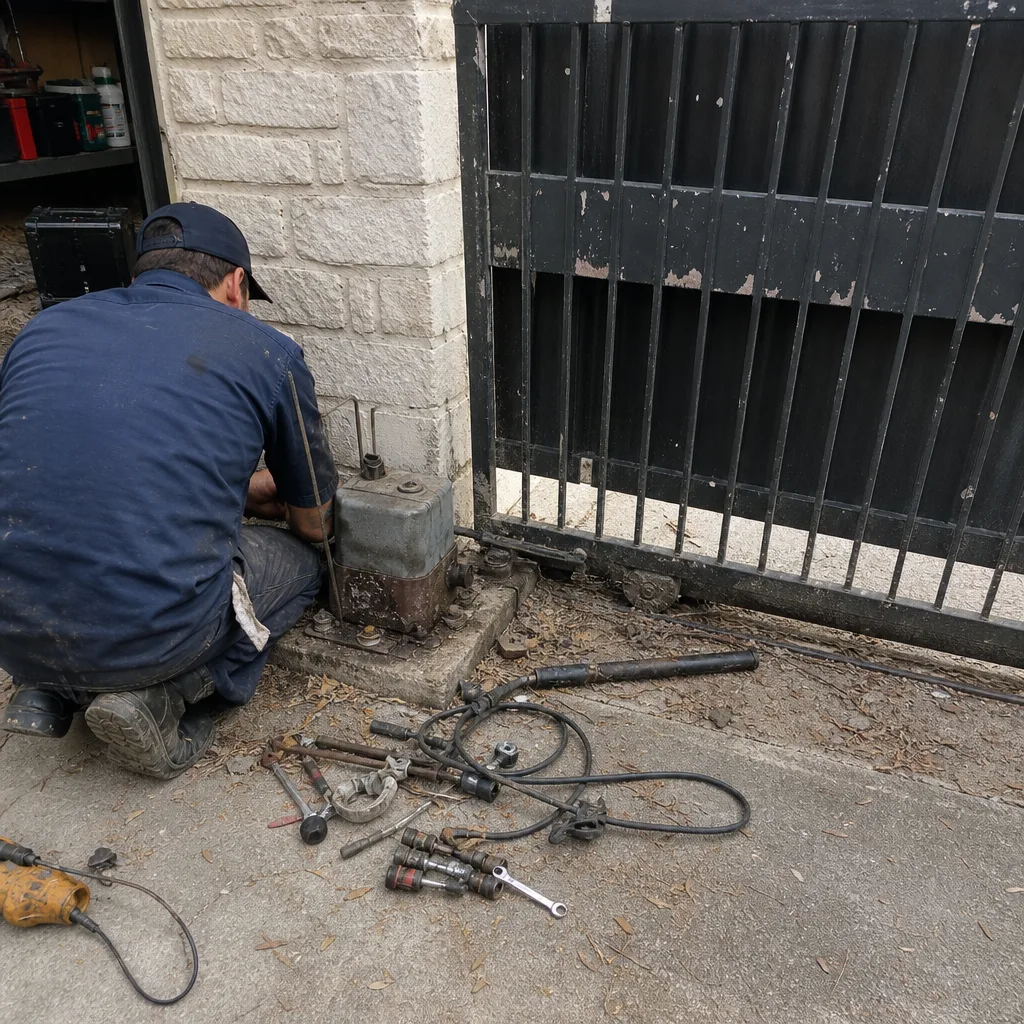 Before
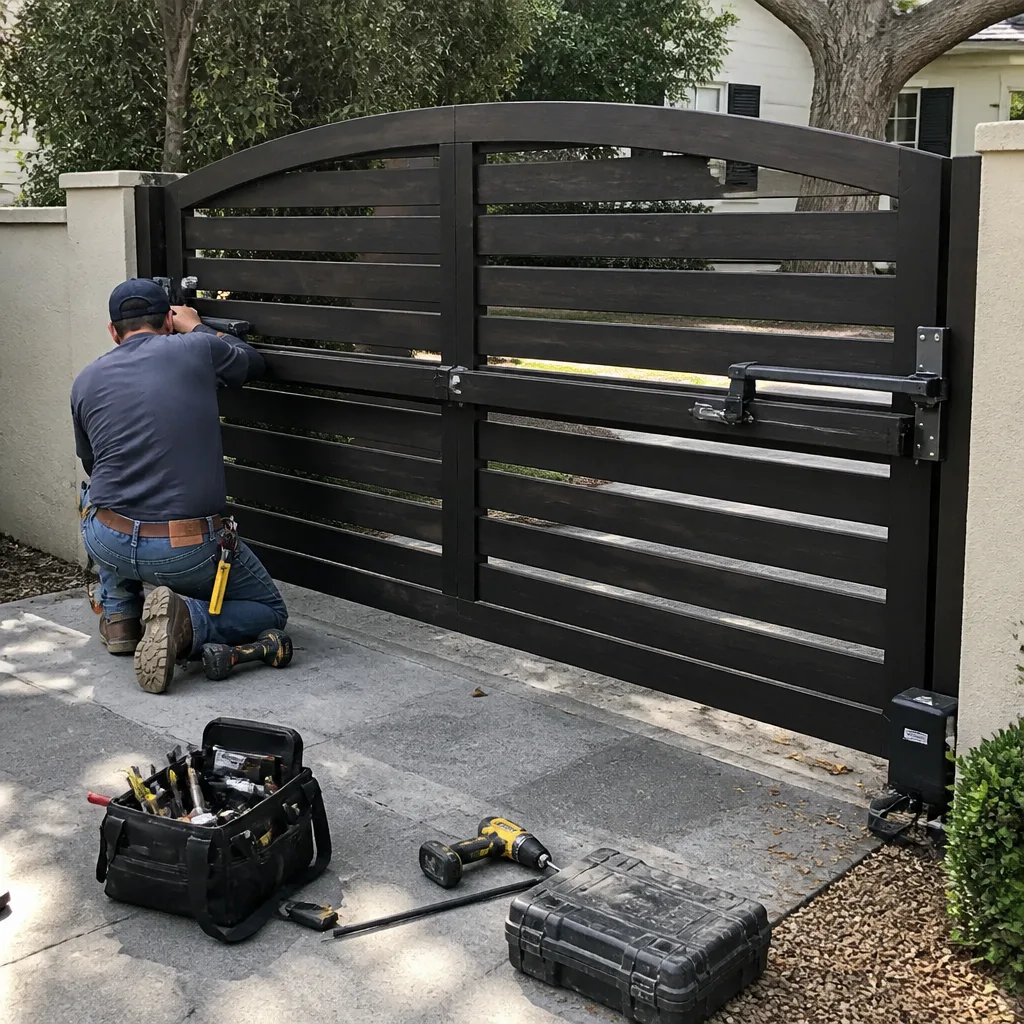 After
After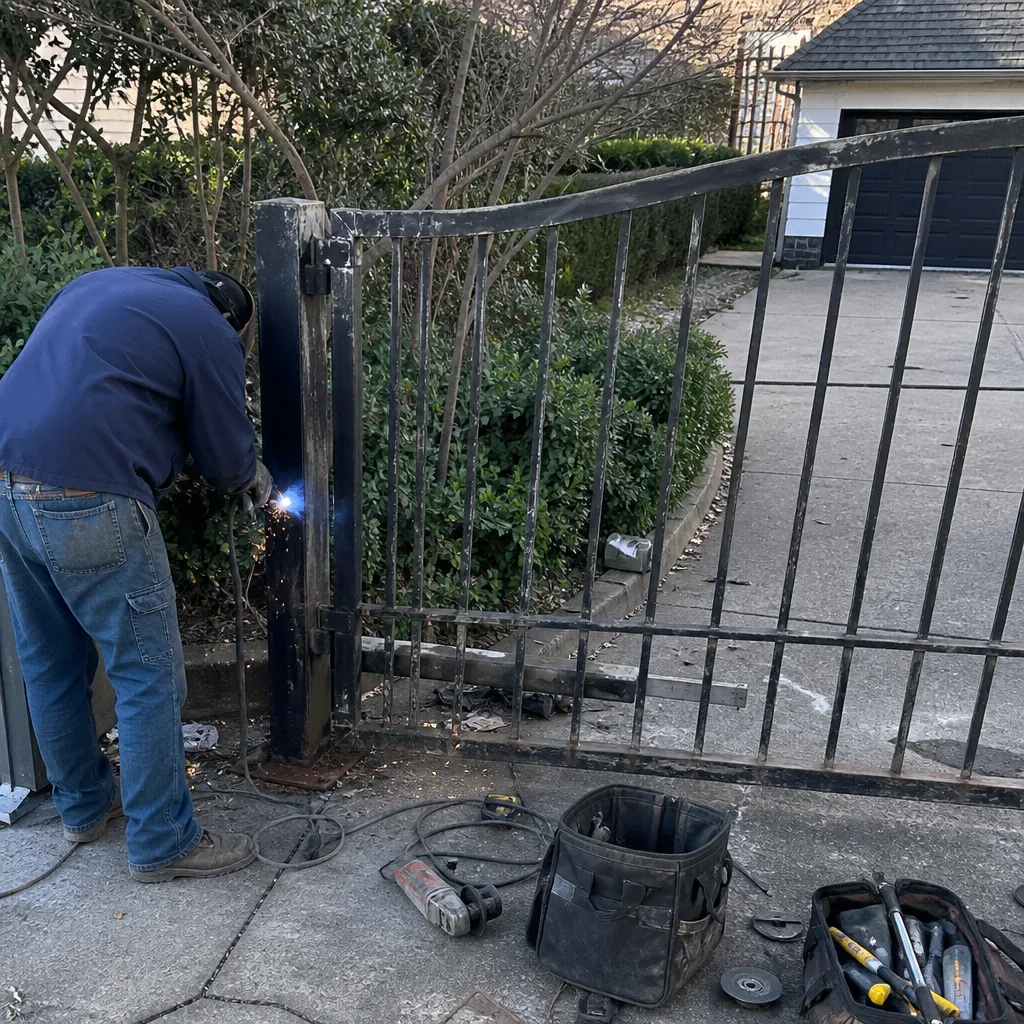 Before
 After
After Before
 After
AfterFAAC Gate Motor Replacement: The University Park Owner’s Guide
If your FAAC gate motor has quit, we stock FAAC-compatible replacement motors on the truck and can usually have your gate cycling again the same day we come out. An installed FAAC gate motor replacement in University Park typically runs $1,100 to $2,400 depending on the model, and we quote the full price before any work starts. Most University Park owners figure out something’s wrong when the gate groans, stutters, or simply won’t budge after years of quiet service. In this part of Dallas, the heat does a number on capacitor banks and winding insulation, so motors that would last fifteen years somewhere cooler often tap out around year eight or nine here. The good news is that a motor swap is straightforward work when you match the right part to the right model, and that’s exactly what this page will help you do.
Which FAAC Models This Applies To
FAAC has made a lot of different swing and slide gate operators over the years, and the motor isn’t a universal drop-in part. The big dividing line is between FAAC’s 24V systems, like the 400, 402, 412, and 415 swing operators, and the hydraulic 750, 760, and 770 series. The little 400-series motors are DC units that bolt into the operator housing; the 750-series uses a hydraulic pump and motor assembly that’s a different animal entirely. If you don’t know which one you have, open the operator cover and look for the silver data plate. It’ll have the model number, the serial number, and the voltage stamped on it. That data plate is the single most useful thing you can read off to us over the phone.
A compatibility gotcha we run into all over University Park: some FAAC 412 owners assume any 24V FAAC motor will fit, but the 412’s motor has a different shaft length and gear pitch than the 402 it replaced. We’ve seen mail-order motors show up in someone’s garage that were never going to mate with their operator. That’s why we match by data plate, not by guesswork. On the OEM versus aftermarket question, we’ll be straight with you: for FAAC’s 400-series motors, there are quality aftermarket equivalents that hold up fine and save real money. For the hydraulic 750-series, we’ve had better luck with FAAC OEM parts. We’ll tell you which one makes sense for your gate, and if an aftermarket part is the right call, we’ll say so and stand behind it with the same 90-Day Done Right Promise we put on everything.
Signs Your FAAC Gate Motor Replacement Is Failing
- Hum but no movement. The motor’s getting power and the windings are energized, but the capacitor that gives it the starting torque has failed. This is the single most common FAAC failure we see in University Park, and it’s usually a capacitor replacement rather than a full motor, which saves you hundreds. But if the hum has been going on for weeks, the motor may have cooked itself trying to start.
- Gate moves slower than it used to. Worn brushes in a DC motor reduce torque over time. You’ll notice it most on hot afternoons when the gate’s been sitting in the sun. If your gate used to swing in 12 seconds and now takes 20, the motor is telling you it’s tired.
- Intermittent operation. The gate works fine for three days, then refuses to open, then works again. That’s often a thermal overload tripping inside the motor because the windings are breaking down. It’ll get progressively worse until the motor quits for good.
- Burning smell from the operator housing. If you catch a whiff of hot varnish or electrical burn when the gate runs, shut it down and stop using it. That’s insulation breaking down on the windings, and continuing to run it will ruin the control board too. Repair gets a lot more expensive once the board goes.
- Gate reverses mid-cycle or stops partway. The motor’s drawing more current than it should because of internal wear, and the board’s current-sensing circuit is cutting power to protect the rest of the system. It’s not a board problem, it’s a motor problem presenting as a board problem, and swapping the board won’t fix it.
Replacement Cost & What’s Included
In University Park, you’re looking at $1,100 to $2,400 installed for a FAAC gate motor replacement, and the spread comes down to which model you have and whether you go OEM or quality aftermarket. A 400-series DC motor swap usually lands between $1,100 and $1,600. A 750-series hydraulic motor runs $1,800 to $2,400, partly because the part costs more and partly because the hydraulic fluid needs draining, refilling, and bleeding. Every quote we give includes the part itself, the labor, the new mounting hardware, and a full test of the operator’s safety features before we call it done. You’ll know the exact price before we turn a single wrench, and that price does not change at the door. If we find something else wrong while we’re in there, we stop and talk to you about it first. No surprises on the invoice.
| FAAC Motor Replacement | Typical Installed Range |
|---|---|
| 400-series (402, 412, 415) DC motor | $1,100 - $1,600 |
| 750-series hydraulic motor assembly | $1,800 - $2,400 |
| Capacitor replacement (if caught early) | $180 - $350 |
Every motor replacement carries our 90-Day Done Right Promise in writing. If something’s not right, one call brings Hal back out, no runaround.
DIY or Call Us?
Here’s the honest split. You can safely check a few things yourself: confirm the breaker isn’t tripped, look for obvious chew marks from squirrels on the low-voltage wiring, and read the data plate so you know your model number. That’s about where safe DIY ends on a FAAC motor swap. These operators run on 115V or 230V line voltage, and the capacitor stores a charge even after the power’s cut. Touching the wrong terminal can hit you with a shock that’ll knock you off a ladder. The motor swap itself also requires re-torquing the gear coupling and resetting the limit switches, which is a fifteen-minute job for someone who’s done a hundred of them and a full Saturday of frustration if you haven’t. We’ve fixed enough botched DIY motor swaps in University Park to know how that Saturday usually ends. If you want a hand, call (936) 296-2568 and we’ll get you on the schedule.
FAQs
In University Park’s climate, expect eight to twelve years from a FAAC motor before heat and duty cycle catch up with it. Gates that cycle forty times a day wear out faster than gates that cycle ten times; that’s true of any brand, including LiftMaster, Mighty Mule, and Ghost Controls, which we also stock parts for. Call (936) 296-2568 if yours is acting up, and we’ll tell you if it’s worth saving.
Sometimes, yes, especially if the failure is the starting capacitor or worn brushes, which we can replace for a fraction of the motor cost. If the windings are burned or the armature’s scored, replacement is the honest call. We’ll tell you which one you’re looking at and quote both options before you commit.
Most 400-series motor swaps take about ninety minutes from start to finish, including testing. A 750-series hydraulic motor runs two to three hours because of the fluid work. We’ll give you a straight time window when you book, and we show up in it.
We keep the most common FAAC 400-series motors and capacitors on the truck, along with a rotating stock for the 750-series. If your exact motor isn’t on hand, we can usually have it in by the next business day. We’re an independent service company, not affiliated with FAAC, which means we’re not tied to a corporate parts pipeline and we can source whatever your gate needs fastest. Call (936) 296-2568 for an exact quote, free of charge.
Written by Hal Gatewood, Owner, Gatewood Fence & Gate at Gatewood Fence & Gate, serving University Park and nearby areas.